~/Documents/Projects/sumner-norman/forest-neurotech.md
Forest Neurotech
A Focused Research Organization for whole-brain interfaces.
Forest is now Arbor Neuroscience, led by Philip Sabes
Neurotechnology — Past, Present, and Future — LabWeek Field Building, Healdsburg, June 2024. Where neurotech has been, and where whole-brain interfaces take it next.
Story
I co-founded Forest Neurotech in 2023, in part based on the research I had been conducting at Caltech. Forest announced the organization and a partnership with Butterfly Network to co-develop their Ultrasound on Chip platform on the same day.
- Butterfly Network announces a 5-year co-development agreement with Forest Neurotech
- Convergent Research announces a major new funding commitment to Forest Neurotech
What
Forest is a Focused Research Organization — a structure designed for work that is too applied for an academic lab and too far from revenue for a startup. It was launched through Convergent Research.
Executive Summary
Forest Neurotech is at the forefront of developing a next-generation, minimally invasive Brain-Computer Interface (BCI) that leverages advanced ultrasound technology to enable whole-brain imaging and modulation. Its platform is poised to revolutionize the treatment of neurological and psychiatric conditions by integrating cutting-edge neuroimaging with precise neuromodulation.
Unmet Need
Neurological and psychiatric disorders are among the leading causes of disability worldwide, affecting millions of individuals and incurring substantial healthcare costs. Current treatment options, including pharmaceuticals and traditional neurotechnology, often fall short due to their limited ability to address the complex, distributed nature of brain disorders. For example, Parkinson’s Disease (PD) affects over 8.5 million people globally with symptoms that range from motor issues like tremors and rigidity to non-motor problems such as cognitive decline and mood disturbances. Existing treatments, such as Deep Brain Stimulation (DBS) and medications, often provide only partial relief and do not slow disease progression. Together with disorders like Depression, Obsessive Compulsive Disorder, Bipolar disorder, Addiction, and others, a significant unmet need exists for a technology that can monitor and modulate brain activity across the entire brain.
Current Technological Limitations
Existing neurotechnologies, including DBS and optogenetics, are either highly invasive, limited in their coverage, or unsuitable for broad clinical application. Traditional approaches often target only small regions of the brain, missing the larger, interconnected networks crucial for addressing complex disorders. Forest Neurotech's ultrasound-based solution fills this gap, providing a scalable platform that offers both extensive coverage and precise control, without the invasiveness of current alternatives.
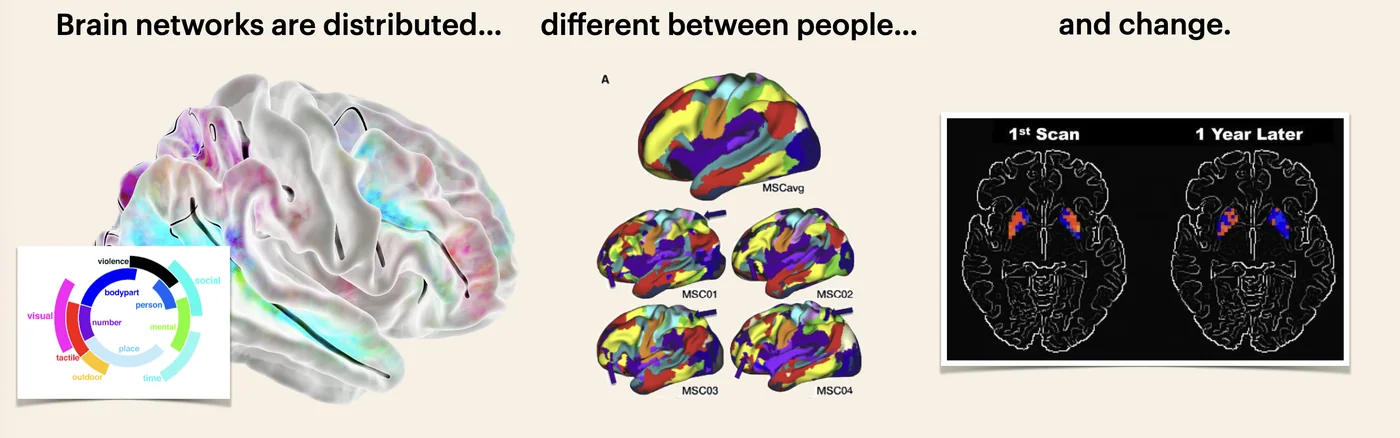
Ultrasound as a Game-Changer
Forest’s approach harnesses the unique properties of ultrasound, which can safely penetrate deep into the brain while offering high-resolution imaging and neuromodulation capabilities. Recent advances in functional ultrasound imaging (fUSI) have demonstrated its ability to detect neural activity with greater sensitivity than functional MRI and with significantly higher resolution (Caltech studies led by a Forest co-founder, Norman et al., Neuron, 2021 and Griggs and Norman et al., Nature Neuroscience, 2023 showed fUSI to be approximately 20 times as sensitive to brain function with up to 800 times more resolution (by volume) than fMRI.) Additionally, focused ultrasound (FUS) can be used for targeted neuromodulation, offering a less-invasive alternative to existing methods like DBS (A Caltech publication led by a Forest founding team member describes ultrasound neuromodulation in Rabut et al., Neuron 2020.)
Whole-Brain Computer Interface (wBCI)
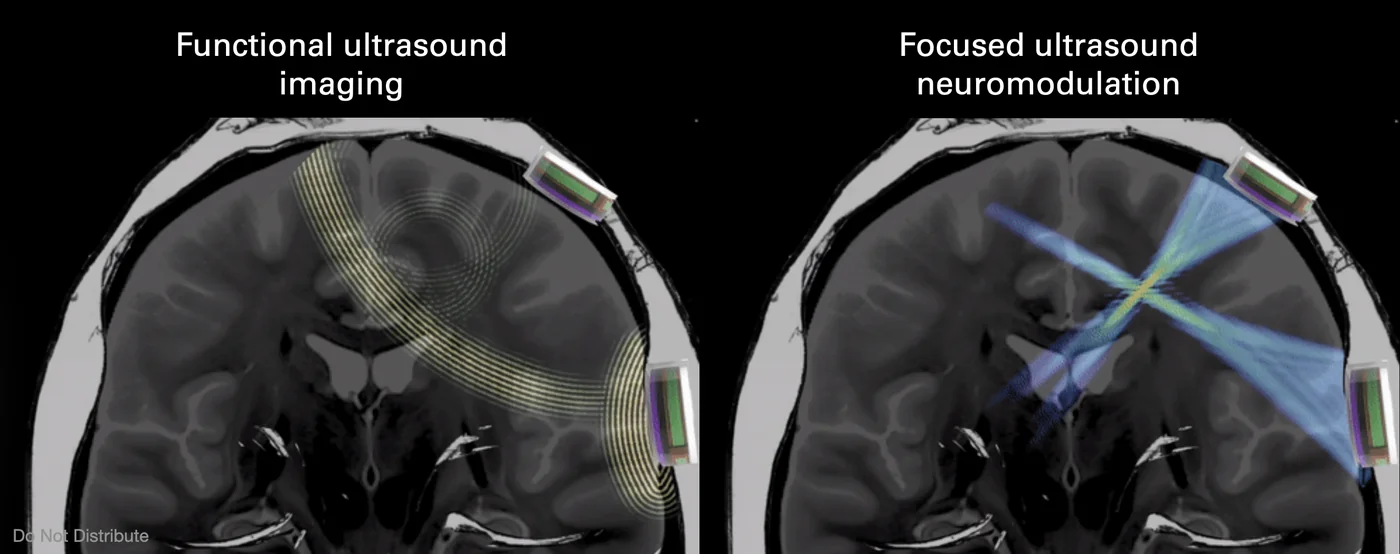
Forest Neurotech's core innovation is the Whole-Brain Computer Interface (wBCI, Fig. 2), a minimally invasive platform designed to observe and modulate neural circuits across the entire brain. The wBCI consists of one or multiple intracranial "pucks" that utilize ultrasound-on-chip technology, connected to an external processing unit. This system enables real-time imaging (Fig. 2B) and modulation (Fig. 2C) of brain activity, offering unprecedented flexibility in the control over neural dynamics. Digital Diagnostic and Therapeutic Ecosystem The Digital Diagnostic and Therapeutic Ecosystem (DDTE) forms the software backbone of Forest Neurotech’s platform, enabling the wBCI to adapt across various neurological disorders. For example, Forest has already deployed the wBCI and DDTE in non- significant risk studies, such as those for traumatic brain injury, but is simultaneously collecting safety and efficacy data that can apply broadly across multiple conditions, especially those with comorbidities. In the future, a single device may be able to study and treat multiple aspects of a disease. For example, devices initially approved for motor symptoms in Parkinson’s Disease (PD) inherently monitor brain-wide function, unlocking the ability to study non-motor aspects of PD (e.g. cognitive decline and mood dysregulation) and any comorbid disorders (e.g. depression). This capability makes Forest Neurotech’s platform uniquely suited to studying the complex symptoms and progression of neurological disorders.
Milestones
Forest Neurotech’s milestones are designed to reflect a process-driven approach that emphasizes iterative development, and integration of scientific discovery with engineering:
Phase 1 (2024-2025): Platform Design and Early Validation
- Integrated System Design and Prototyping: Achieved a functional prototype capable of measuring brain
activity across 25% of the brain by volume, with iterative refinement based on real-time feedback between hardware and software teams (Complete).
- Initial Testing and Human Data Collection: Began preclinical testing and early human trials,
demonstrating that the prototype could safely monitor brain activity (Complete). Scaled prototype production for broader clinical use and expanded to new clinical indications (In progress).
Phase 2 (2025-2027): Scale-Up, Clinical Validation, and Regulatory Advancement
A Focused Research Org
Forest Neurotech is a Focused Research Organization (FRO), a novel form of nonprofit startup for science (Fig. 3). FROs fill a key structural gap in the research and development (R&D) system, enabling major advances in areas that (i) require levels of coordinated engineering or system-building inaccessible to academia, (ii) benefit society broadly in ways that industry cannot rapidly monetize, and (iii) harbor opportunities for acceleration through innovative new technologies and processes.
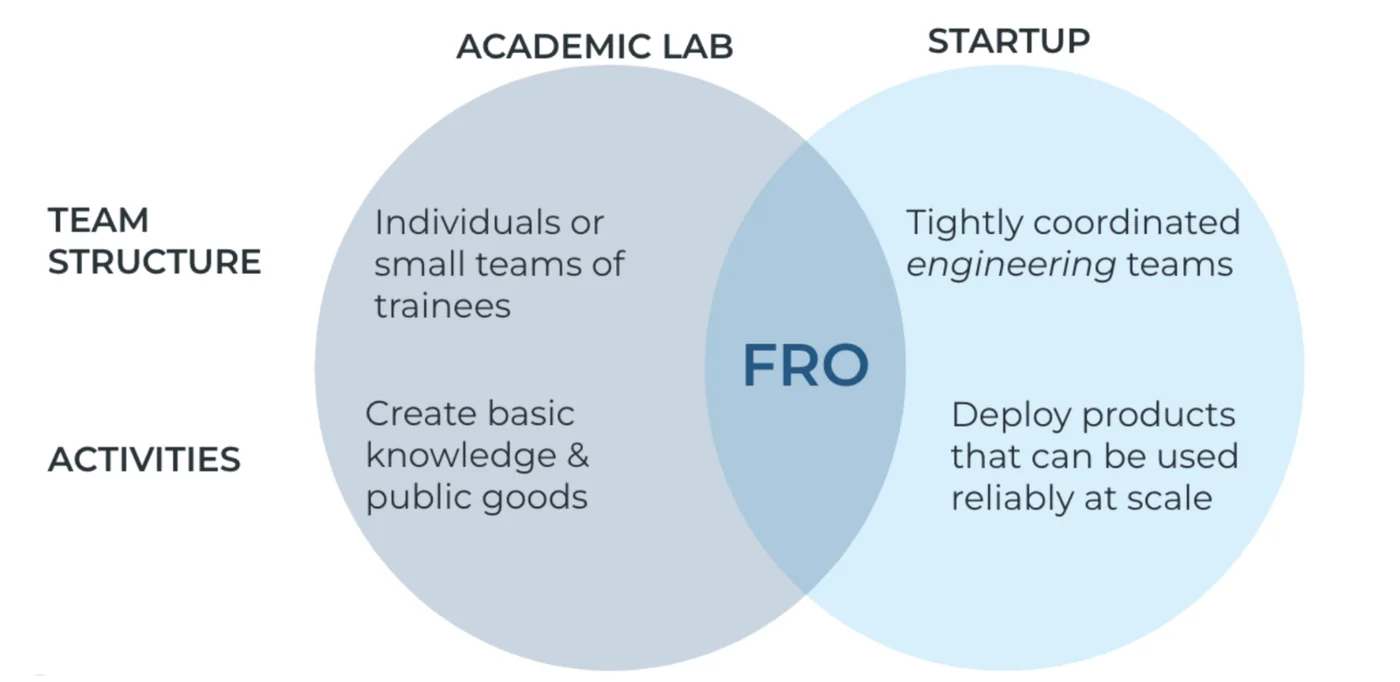
Forest Neurotechnology is a nonprofit LLC whose single member, Convergent Research, is a FRO umbrella 501c3 nonprofit and incubator. Convergent currently operates >10 FROs and has others in the pipeline, with fundraising commitments from donors including Eric Schmidt, Ken Griffin, Simons Foundation, Grantham Foundation, the Alfred P. Sloan Foundation, Richard Merkin, Lyda Hill, and others.
Forest opted to launch as a Focused Research Organization (FRO) to maximize broad public impact through the extensive dissemination of its platform technologies. As an FRO, Forest is ideally placed to deploy its technology across multiple indications simultaneously through highly capital efficient clinical and manufacturing agreements. This approach accelerates identifying the most promising areas of impact.
Progress to Date (updated January 2025)
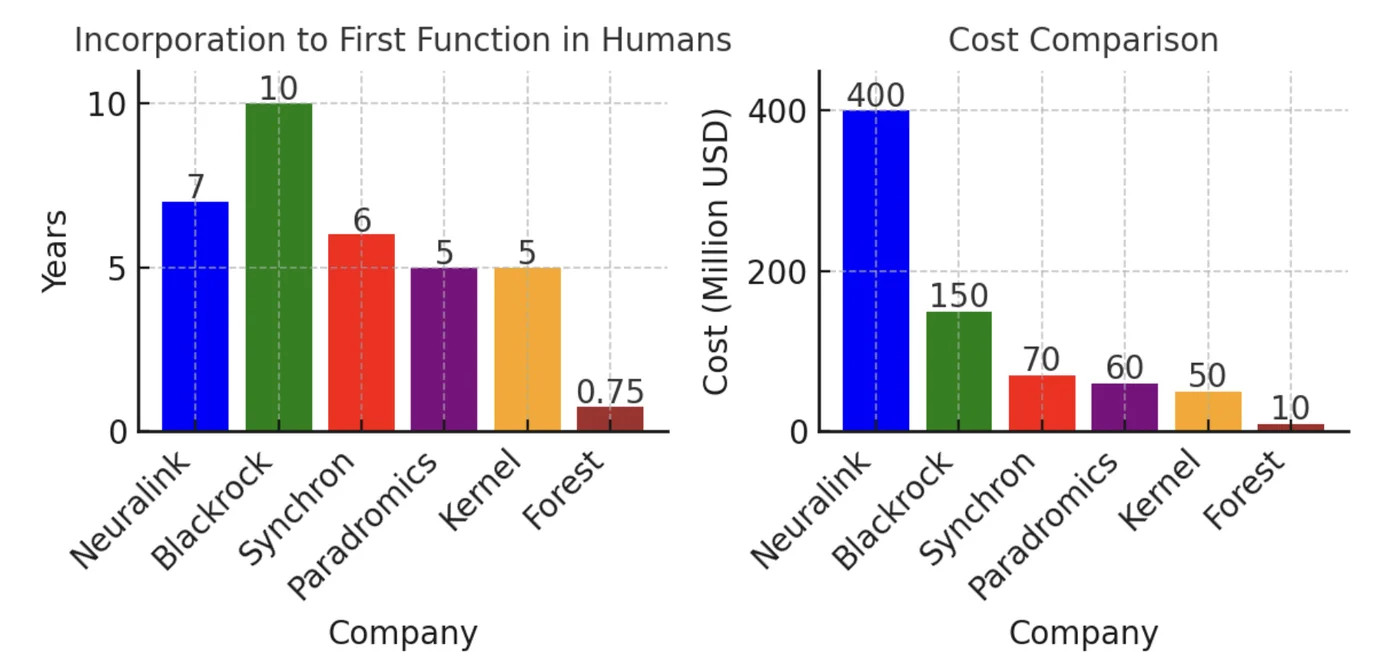
Forest Neurotech has rapidly advanced its BCI platform, moving from incorporation to human trials faster and more cost-effectively than other neurotechnology companies (Fig. 4). Leveraging strategic corporate partnerships and collaborations with top research institutions, Forest accelerated its development timeline. Specifically, Forest's engineering team developed a first-of-its-kind, highly programmable, miniaturized ultrasound device that’s already proving its worth in clinical settings. These advancements are enabling early successes in functional imaging and neuromodulation, and early scientific findings. The following sections break down these achievements and the momentum driving Forest forward.
Strategic Partnerships
Butterfly Network: In October of 2023, Forest announced its partnership with Butterfly Network to co-develop state-of-the-art miniaturized ultrasound-on-chip enabled devices. Its collaboration with Butterfly Network has significantly accelerated its roadmap developing the ultrasound-on-chip technology that powers the wBCI.
Leading Research Institutions: Forest established partnerships with top-tier research institutions, including UCLA, University of Iowa, and Caltech. It has also secured letters of intent to collaborate from UC Berkeley, Cedars Sinai, Harvard, UC Davis, Stanford, and Baylor College of Medicine. These collaborations have enabled Forest to conduct pre-clinical and clinical research that validates its technology and expands its applications across various neurological and psychiatric conditions.
Engineering
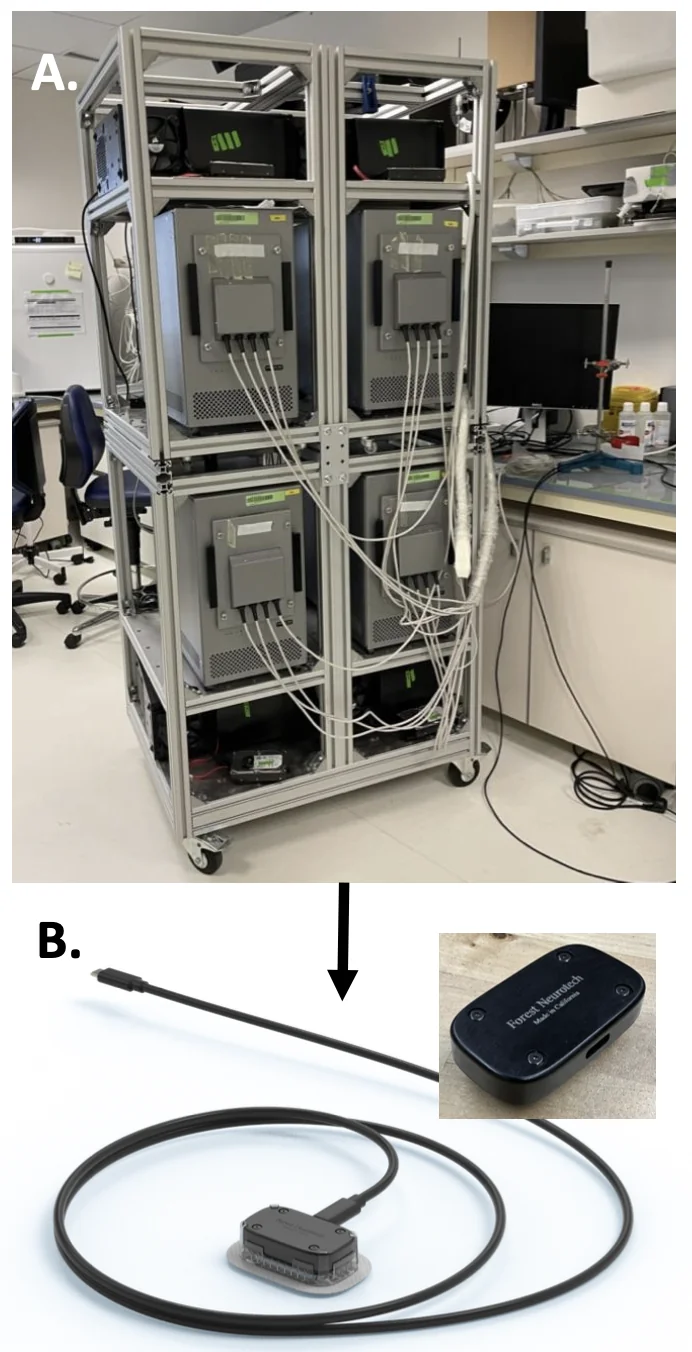
Forest Neurotech has successfully developed its first miniaturized ultrasound device that represents a significant advancement in the field. The device, roughly the size of a thumb, costs less than 1% of research grade ultrasound scanners while offering ~9 times as many channels, making it significantly more programmable and accessible for clinicians and researchers (Fig. 5).
By leveraging the strategic partnership with Butterfly Network, Forest successfully deployed its custom hardware in human trials within six months of launch, significantly outpacing similar efforts (including fully non- invasive hardware efforts) in the commercial BCI field. Alongside the hardware, Forest developed a complete software stack that includes image reconstruction, beamforming, filtering, and functional imaging acquisition and analysis. This software has been fully integrated with the device and deployed in clinical settings with users (neurosurgeons), performing tasks that previously required much larger and more expensive equipment.
Science
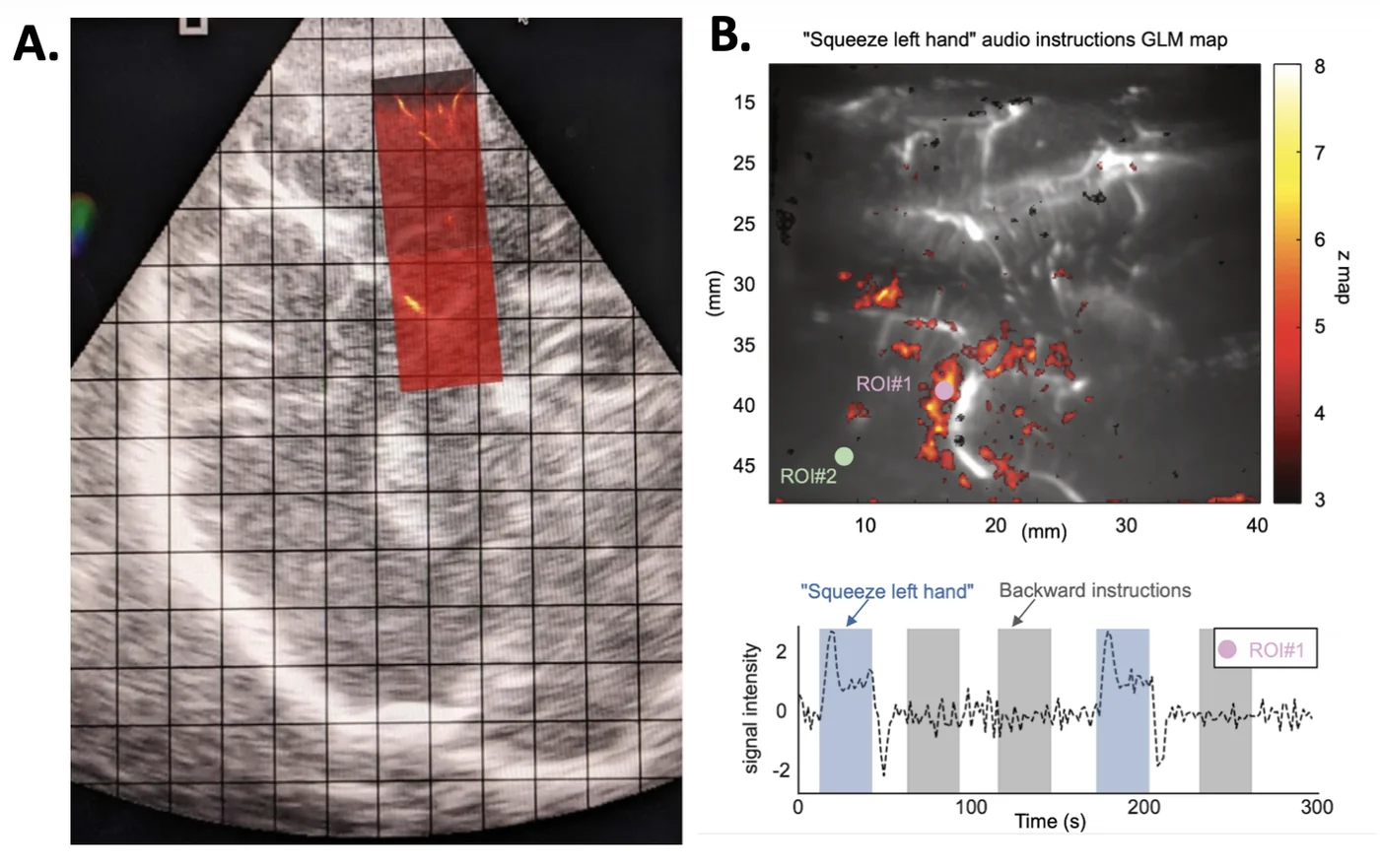
Before the establishment of Forest Neurotech as a FRO, the use of silicon-based ultrasound probe technology to perform functional imaging and neuromodulation had not been conclusively demonstrated. In its early studies, Forest successfully imaged an entire slice of the human brain, exceeding its estimates, and validating the technology’s capability (Fig. 6A). Next, Forest showed clear functional imaging data in humans (Fig. 6B). Less than one year from launch, this work has shown that silicon-based ultrasound technology can indeed perform functional imaging in humans, addressing a key question in the field. Additionally, Forest matched or exceeded all critical parameters — pressures, intensities, and durations — used in seminal neuromodulation studies that demonstrated significant effects.
Organization
Forest Neurotech is located in Los Angeles, CA and Palo Alto, CA, led by Sumner Norman, PhD (CEO, creator of ultrasonic brain-computer interfaces at Caltech). It is advised by neuroscience and technology leaders from leading institutions such as Caltech, Google, Neuropace, Columbia University, and OpenAI. Update: as of 2026, Philip Sabes, PhD will serve as Forest Neurotech's CEO